

First things first, we are not talking about rosemary oil here, we are talking about rosemary water on your hair. If you are asking what the differences are, let me help. Rosemary oil is concentrated, while rosemary water tends to be much more diluted. Rosemary oil contains the essential oils of the plant, while rosemary water is made of the water-soluble parts of the plant. Most use rosemary oil for things like therapeutic treatments or even in diffusers (although some use a very diluted form for their hair) while rosemary water is more likely to show up in cosmetic forms.
I use rosemary water for my hair and my scalp.
Rosemary water has a somewhat controversial view on it’s effectiveness for hair growth, but it’s properties can be used for other things (there is no scientific data, widely recognized by the community, to show that rosemary is beneficial to hair growth). I use rosemary water for my scalp because it is an astringent which can help the oil production on my scalp. It is also known to have mild properties that stimulate the blood flow to the scalp which many people believe helps the hair to grow faster. It also has antimicrobial properties that can help with dandruff and calming properties that can help with irritation and the itching of the scalp. For me, rosemary water is the ultimate dry shampoo.
For me, applying rosemary water on my scalp, and then gently massaging it into my scalp for a couple minutes, gives my hair the fullness and even the feeling of thickness that I need in between my weekly hair washes. I don’t use it to grow my hair simply because I haven’t seen that benefit. And while I have seen some influencers mist rosemary water on their hair as they are getting ready in order to tame fly-aways, or even the dreaded fizz, for me it’s all about that fresh look. If I don’t use my rosewater between my hair washes, my hair tends to get lifeless and dull.
Rosemary water shouldn’t be used daily, as it will dry out your scalp and can cause even more irritation than you might already be experiencing. Also, even though it is a mild herb, you still want to do a patch test before you use it on either your scalp or your hair.

Here are a couple of questions I had, and a couple answers I found, when I first learned about rosemary water:
- Who shouldn’t use rosemary water? Those that are taking high blood pressure medications or diabetes medications should check with their doctor first. Also, if you are already using a product or a medication for hair loss, rosemary water is not something you want to add to the mix.
- Can you leave rosemary water on your hair overnight, or should you wash it out? This is actually something that you should determine for yourself. Some people find that leaving rosemary water on your hair overnight leads to great results (me) but some people find that it doesn’t suit their hair to leave it on for very long (much like an oil or hair mask). If you are going to leave rosemary water on for long periods of time, it is suggested that you use a spray bottle rather than using it as a rinse.
- How long can you store rosemary water in your refrigerator (because it must be stored in your refrigerator)? Between one to two weeks is the general answer; however, I have found that I can leave it longer and the benefits remain the same. I also make sure to do the smell test and look for any discoloration in my rosemary water prior to putting it on my hair.
- Can rosemary water change hair color? Nope. If you see your darker toned hair turning darker, it is most likely a temporary effect and will go away.
- How often can you use rosemary water on your hair? The general consensus here seems to be about 2-4 times a week. I don’t ever go over 2, but as I always say, it is your hair. I think the only time I would ever want to use it more than 2 times a week is if I had, let’s say, an important date or event and I wanted some extra volume or shine in my hair.
- Does rosemary water make your hair shiny? There is no evidence that rosemary water will make your hair shiny. However, there is some evidence cloves do; which is why you will find in the recipes below, I use cloves along with rosemary.
- What color should rosemary water ultimately be? If you are using the “light” recipe, which I will explain below, it should be yellowy-green. If you are using the more concentrated recipe below, that yellowy-green will turn darker to a light brown color.
- Should I be using rosemary water or rosemary oil? If you are looking for a mid-week pick-up, or if you are prone to a more oily scalp, rosemary water is the best choice. However, if you have a dry scalp, you might want to try rosemary oil (just don’t leave it in overnight, as it might clog your follicles).
- What are the disadvantages of rosemary water? If you use too much of it, it can lead to a dry and irritated scalp. If can also leave the ends of your hair brittle; this has actually happened to me, but I easily corrected it when I put a hair mask with hydrating properties on my hair during my weekly hair-wash day. Now, I simply avoid putting it on my hair shafts and concentrate on my scalp.
- How can you use rosemary water? There are actually three ways: a hair rinse, a DIY hair mask, or a scalp refresh. (I use the scalp refresh).
While I will be showing you two rosemary water recipes below, let’s start with how you can use rosemary water.
The first, as I said, is a hair rinse. Here, you can make the rosemary water and then set it aside. Rinse and condition your hair as normal. Before getting out of the shower, pour the rosemary water onto your wet hair, massaging it into your scalp. After a few minutes, simply rinse it out with cold water.
As a DIY hair mask, you will simply mix the rosemary water with aloe vera or coconut oil (or some other hydrating ingredient), then leave it on your scalp for how ever long you like (this will depend on your hair’s porosity). Rinse it with shampoo and continue your hair care routine as normal. I will say that putting coconut oil near your scalp can be problematic; it is notoriously hard to get out of your hair. And if you leave it on your scalp, oils can clog the hair follicles causing even more problems. I love DIY projects, but don’t recommend this one; hair follicles are tricky things.
The third option, and the one I use, is basically a scalp refresh. This is where you take the rosemary water and put it in a spray bottle. Then you will simply want to spray the water directly on your scalp and massage it into your scalp for a couple of minutes. Typically, I section my hair and pull it so that my scalp is exposed (please don’t yank), spray the rosemary water directly on the exposed scalp and then massage it in. I do this not only on the sides of my hair, but my front part, the back of my head, behind my ears, and underneath my hair. I try not to spray the water directly onto my hair but rather stick to keeping it as close to my scalp as possible (of course, you are going to get some on your hair and that is fine; no need to panic). I then let it dry and go on about my day.
So I said there are two recipes. There are two recipes because one is what I call light and the other I call more heavy. If you are going to do a rinse, or spray it on your hair shafts, I would stick to the light version. If you are like me, and simply going to put it on your scalp once or twice a week, avoiding your hair, then the more heavy version might be better. Start with the light recipe and then move on to the heavier one; it has the same ingredients, it’s just made a little differently.
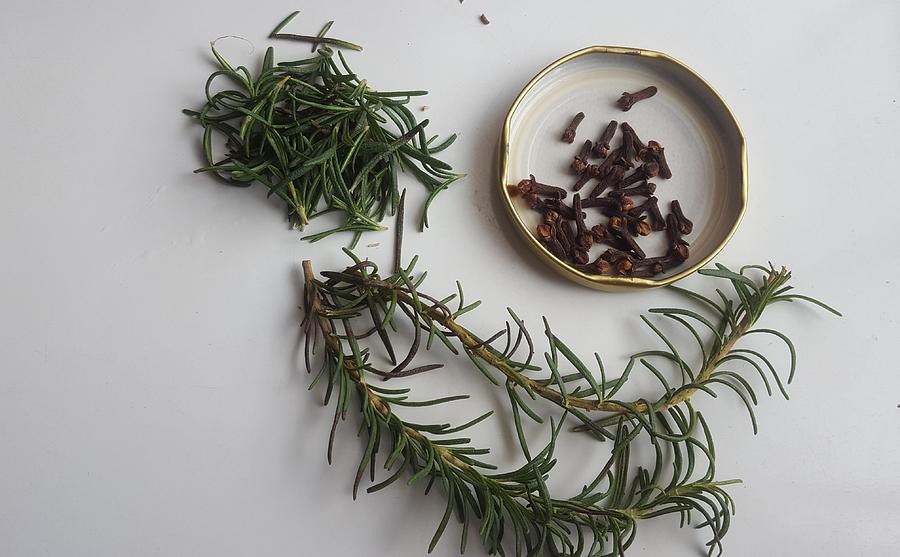
Light Recipe:
As I said previously, the ingredients are the same for both recipes, it just depends how concentrated you want your water.
You will need:
- Fresh, Organic Rosemary (Buy Here)
- Whole Cloves (Buy Here)
- Water
- Spray Bottle (if you are going to spray onto your scalp; I like clear plastic bottles so I can see the water, and one that has a “trigger spray” like this one Buy Here)
In a sauce pan, boil water. Once it reaches a light boil, take the pan off the burner and put in the rosemary and cloves into the hot water (your discretion on amounts although I usually put at least 5-6 cloves). Let it cool. Once cooled, strain the water and then funnel it into your spray bottle. (The longest step here is the cooling process)
For the Heavier Version:
You will need the same ingredients:
- Fresh, Organic Rosemary (Buy Here)
- Whole Cloves (Buy Here)
- Water
- Spray Bottle (if you are going to spray onto your scalp; I like clear plastic bottles so I can see the water, and one that has a “trigger spray” like this one Buy Here)
For this recipe, fill a mason jar with your rosemary and cloves. If I am using this method I will typically put more rosemary and more cloves into the jar than if I am using the first recipe. Lightly boil the water, and then pour it over the rosemary sprigs and the cloves. Tightly seal the jar (be really careful, because it will be hot), and leave it for twenty-four hours. After it has time to sit, strain the water and then funnel it into your spray bottle. (Here the longest step is the 24 hours, as I am sure you guessed).
That’s it. That’s the recipe. I will mention that there are those that say you shouldn’t boil the water completely, but rather take it off the heat right before it begins to boil; I just haven’t seen any difference. Again, if you are going to use rosemary water for a rinse, just use the first version; but if you are going to use it for your scalp, use the second.
Full disclosure is our middle name (ok, not really). But we do like to be transparent. This website, and all our social media platforms, may contain affiliate links. When you click on, and/or make a purchase through one of the affiliate links we may receive a small commission or other compensation at no cost to you. Please assume that any links on our social media platforms are affiliate links. As an Amazon Associate I earn from qualifying purchases. Our use of affiliate links, however, do not drive our opinions or influence us in any way.
 From My Girl Friday
Leave a comment