


It can be daunting, like almost everything in skincare, when you are trying to figure out not only if you need Vitamin C in your routine, but exactly which brand of Vitamin C will work best for you. When I first learned about Vitamin C, I wasn’t completely sold that this was a product I actually needed in my routine, despite the research I did. But I have come to understand that finding the right product for my skin, the right Vitamin C derivative (because there are a couple), not only adds to the protection of my skin but also has other skin benefits that I need.
First, before we get into Vitamin C in detail, let’s talk about what it actually does for your skin. Skincare isn’t always about fixing what is broken, but also making sure that you are setting that skin up for the best look in the future. Vitamin C can actually do both. Besides being an antioxidant, which will protect your precious skin from environmental factors like pollution, stress, smoking, fried food, alcohol and even the sun, it can boost collagen production, protect the skin’s barrier, and overall, revive your skin’s appearance. Vitamin C also enhances the best qualities of our sunscreen (which we should be using religiously) making sunscreen more effective for our skin and aging-gracefully.
Truthfully, not everyone needs a Vitamin C in their routine. That is up to you; although I tend to think that the benefits of using it outweighs many of the objections. Sensitive skin can have issues with Vitamin C, although in my recommendations below, I included a Vitamin C specifically make for those with sensitive skin. Young skin, those under the age of 20, doesn’t need Vitamin C (again, if you have to have it, go with the sensitive skin version). I have also included in my recommendations an alternative to Vitamin C that might be a better option if you have tried various Vitamin C products and had trouble with them.
Before we go further, let’s talk about our skin barrier for a moment. The skin barrier is the outmost layer of skin, and it has a really fancy name. It can easily be damaged, and if damaged, it can take weeks to repair. I will address how to repair it in a separate post. You will know if your skin barrier is damaged if it turns red, becomes irritated, it hurts when you put products on your skin, or if the skin turns dry and flaky all of a sudden. You will know if you damaged a skin barrier and there are steps you need to take to fix it before you resume your skincare journey. Vitamin C, for most people, is safe and effective, especially if you find the product that works for you; for others, it is just too harsh. Fun story, I killed my skin barrier by putting lemon juice from a fresh cut lemon directly on my face. I knew within an hour that I did something very, very wrong.
When choosing a Vitamin C for the first time, please don’t pick one with a high percentage of the active ingredient. Instead, this a product that you want to either start with a low percentage or one that is universally tolerated. And I will warn you now, for some Vitamin C can have a smell; many people attribute the smell to hot dog water. This is not a fragrance that they have added to a product (they would pick something better) but rather, the formula and Vitamin C itself simply smells this way. The smell goes away quickly, so I advice to try and breathe through your nose.
Vitamin C should be put on your skin when it is dry and clean. It is best used in the morning, and needs to followed up with at least a moisturizer, which I’ll explain why next. There is a bit of back and forth if you should put the Vitamin C on your skin and then wait a couple of minutes before you put the next step in your routine on your skin, or if you should simply continue with your routine after the Vitamin C without waiting. Personally, despite the fact that I know that once you put something on your skin, your skin is going to begin absorbing that product, I like to wait a couple of minutes and make sure the Vitamin C has a chance to do its magic.

Vitamin C is a notoriously unstable ingredient; there is just no getting around nature on this one. So it is important to understand that unstable ingredients can be less effective and turn more dangerous for our skin barrier than say niacinamide. Think shelf-life. Vitamin C immediately loses potency the moment it is in contact with air, water, or even sunlight. This is why you will often see Vitamin C serums in opaque, glass jars, with pumps instead of droppers. Also, Vitamin C serums should really be used within three months, and stored in a dark, dry place, with the lid tightly closed.
Learning the different Vitamin C derivatives would take time, and I am not going to go into that in this post; however, the most effective form of Vitamin C and the one that you probably want to look for is called L-ascorbic acid. Also, the percentage of Vitamin C is important. You want to stick to a range between 2% – 20%. I started my Vitamin C journey with 10% and have only started using a 20% version. It is always better to start low and slow, then to jump into any product with gusto!
There is not many things that Vitamin C can’t be paired with; however, there are a few. You don’t want to use it with an alpha hydroxy acids (like glycolic acid), beta hydroxy acids, or retinols; this is one of the reasons it is often advised to use in the morning. There is an exception, as there always is. You can use Vitamin C and Lactic Acid in combination (you put the lactic acid on first and let it dry). Companies and experts such as the people of the popular Dr. Gross brand recommend this pairing. The lactic acid helps pave the way so the Vitamin C can penetrate deeper and work more effectively. The key here is to know your skin and what it can handle; if you have sensitive skin, I would steer clear of this combination.
According to the site Real Simple, “Combining vitamin C serum and broad-spectrum sunscreens that protect well against UVA rays has been shown to be more effective at neutralizing free radical damage from sun exposure than just using sunscreen alone.” (See full article here.) The key takeaway here is protection and neutralizing. We don’t want free radicals on our skin, prematurely aging us and making our skin look dull and lifeless. Combing Vitamin C and sunscreen is simply a no-brainer, and since you are using Vitamin C in the morning and never forgetting (even for one day) your sunscreen, this should be easy to incorporate.
It needs to be stated that Vitamin C has a tendency to make your skin tan more easily. This is due to oxidation of the Vitamin C, which is also explained in the article I sited above. However, it also needs to be stated that Vitamin C should never be used as a self-tanner. Don’t slather an expensive Vitamin C all over your body and then go sit outside in the sun; it isn’t healthy and in the long run will damage your skin’s health. Use sunscreen religiously instead. I will share that when I began Vitamin C, I noticed that the tops of my hands were much tanner and I honestly couldn’t figure out why (hadn’t gotten that far in my research). I finally understood, that while I always protect my face, my hands were exposed to the sun more often than my face (although my face also got a little tanner). Because I wasn’t taking as much care to protect my hands, they were getting oxidized. In case your wondering, I take all the serums that I put on my face, down to my next and chest, and onto the back of my hands. Hence, Vitamin C on the back on my hands and poof, tan.
So now that we know the highlights about Vitamin C, or at least what I know about Vitamin C, let’s get to the recommendations.
First, it needs to be stated that the products I recommend are based on my personal usage and my research. While I have included links to buy these products, I would much rather you use this information as a spring-board to find the product that is best for you. I am not a dermatologist, nor am I a cosmetic chemist. I don’t have a clue what your skin type is and ultimately, which of these products would work best for you.
This website, and all our social media platforms, may contain affiliate links. When you click on, and/or make a purchase through one of the affiliate links we may receive a small commission or other compensation at no cost to you. Please assume that any links on our social media platforms are affiliate links. As an Amazon Associate I earn from qualifying purchases. Our use of affiliate links, however, do not drive our opinions or influence us in any way.
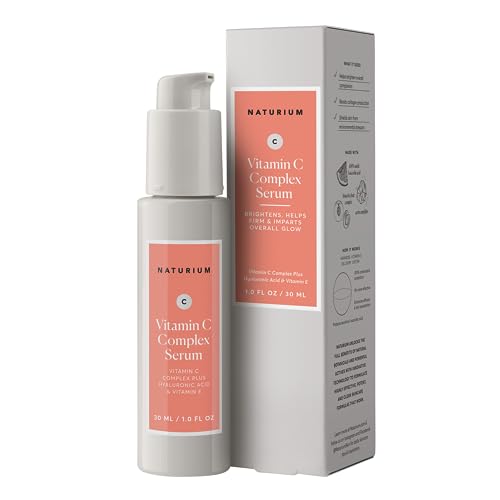
This serum is light-weight, easy to apply and comes in a glass, opaque bottle with a pump. (My first three musts). This serum also contains L-ascorbic acid and Kakadu plum (both are powerful antioxidants.) It has all the frees that we want – gluten, paraben, etc. so it is a good serum for sensitive skin and those that are just interested in an easy formula that will get the job done. You will see in most of my blogs that I will endorse Naturium products. I find them to work well with other products, they often come in packaging that makes the most sense, and their customer service is great.
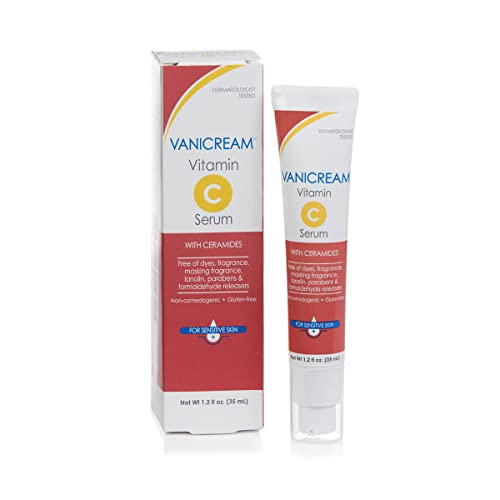
This serum is perfect for those with sensitive skin or those who just want to dip their toes in the Vitamin C world. It contains, according to it’s website, a potent form of a Vitamin C derivative called THD Ascorbate (which can often be easier for sensitive skin to tolerate) and ceramides to help the skin’s barrier. I would say that while this is a great choice for those with sensitive skin, this might not be the best product for those over the age of 40. It is a simple, easy formula; but it may not be powerful enough for those who need the extra protection, as we all do as we age.
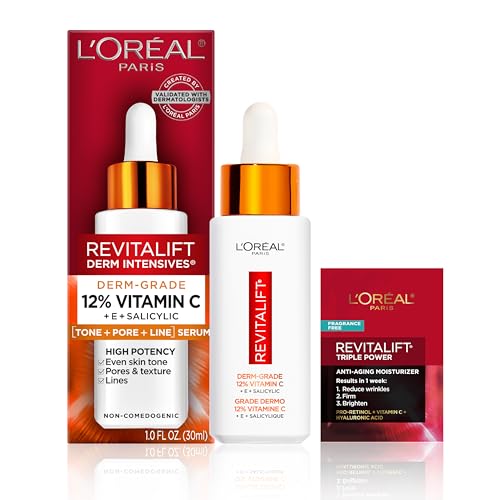
This is not a 2% beginner serum, but it isn’t quite the 20% serum that those who have used Vitamin C for a long time are looking for. While most Vitamin C serums have Vitamin E in their ingredient list, like this one does, L’Oreal’s version also has salicylic acid in it. Salicylic acid can and is often used to help with skin problems such as mild acne, black heads, or white heads. So while this Vitamin C is brightening your skin tone, the salicylic acid will be making it smoother (just be careful because this acid can dry out your skin and you shouldn’t use any other acids with it). The website claims that it is good for all skin types and does not clog pores but these kind of claims should always be taken with a grain of salt. However, because this is readily available at most drugstores, it is an affordable and easily accessible product to try.
- Skin Ceuticals C&E Ferulic with 15% L-Ascorbic Acid
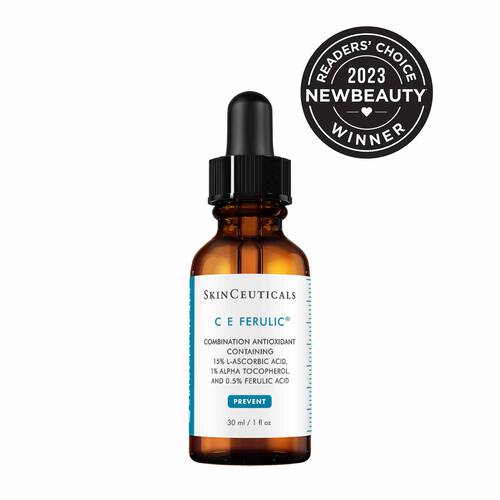
I don’t often recommend this product (and in fact, will have to update my affiliate link to it) because it comes in a dropper bottle. At $182 dollars you will have to use the bottle up within 30-45 days or risk the product going bad. However, and there is a big however, the studies and data backing up this patented formula make it worth mentioning. Despite the bottle top, this is actually a top of the line product in the world of Vitamin C. The ferulic in the ingredient list is another powerful antioxidant mostly found in fruits, vegetables, and sometimes grains. If you are in the market for a top-of-the-line Vitamin C, this one is hard to beat.
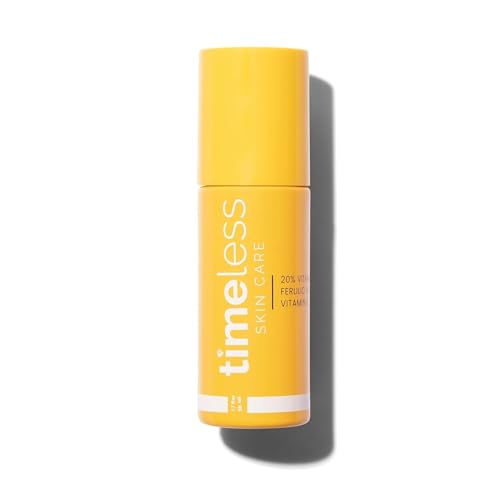
Timeless Vitamin C has just started to gain the popularity I think it deserves. It comes in two concentrations: 10% and 20%. Like the above Skin Ceuticals product it does contain both Vitamin E and Ferulic, although because Skin Ceuticals is patented it isn’t in the same dosages. I like that this product doesn’t contain dyes, so you can easily tell if the Vitamin C serum turns bad (it will turn a rust color). The packaging of this product is an opaque bottle, with a pump. The website states that it is for every skin type. This is a great product especially if you are looking for the 20% concentration, especially given it’s price and reputation.
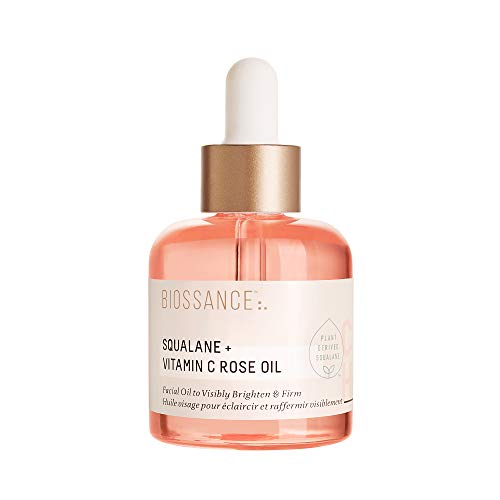
Don’t let the oil fool you; this is a great product especially for those with dry skin. This is not a serum, like the rest of the products in this list, so you are actually going to use it after the rest of your serums and moisturizer. The website claims this is a clean formula (although we always take that with a grain of salt), and my trusted reviewers have said it makes their skin dewy. However, if oils aren’t your thing, then you might want to stick to a serum. It claims to hydrate the skin, which most oils can do, and still take care of those pesky fine-lines. The one note I will say here is that this product sometimes doesn’t play well with others like AHAs or Retinols. So if you have sensitive skin, there might be a better pick for you.
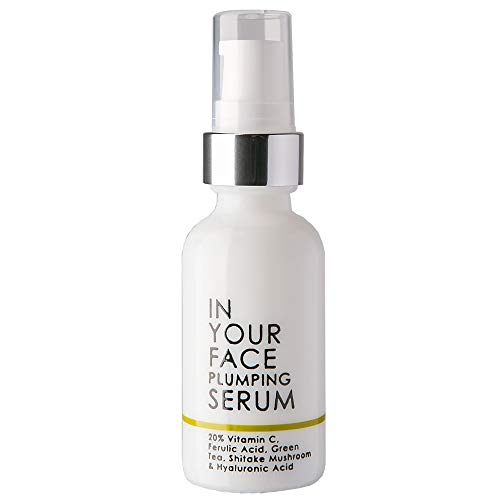
This is a great product for those who are looking to age gracefully. It has everything from Shiitake mushrooms, Jojoba oil, Ferulic Acid, green tea, and hyaluronic acid, along with your daily Vitamin C. The great news about this product is you don’t actually need a lot to spread over your skin; one or two pumps will do it. It has what I consider a good price tag ($75) for what you are getting.
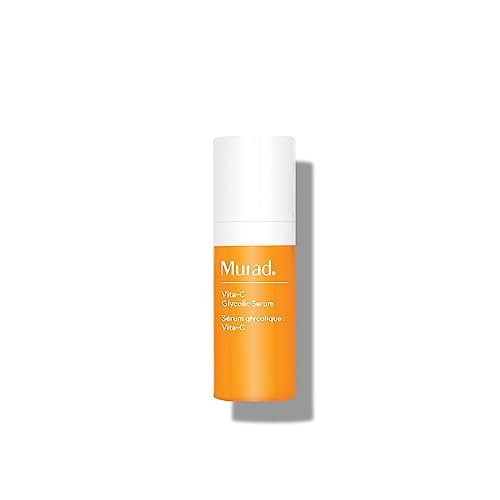
This Vitamin C is backed by a well-known and well-respected brand. Murad is dermatologist founded so you know the ingredients and the testing of the product is done well. This Vitamin C is stabilized by gold (which is more common than you think) and includes glycolic serum to help improve the overall texture on your skin. I love the packaging on this product because it keeps air from oxidizing the Vitamin C before you are ready to use it. The only issue I have for this product, but seems to be more and more common these days, is that Murad patented their technology so it is hard to know exactly what form of Vitamin C they are using and at what percentage. Still, if you go by trusted brands, this might be the one for you.
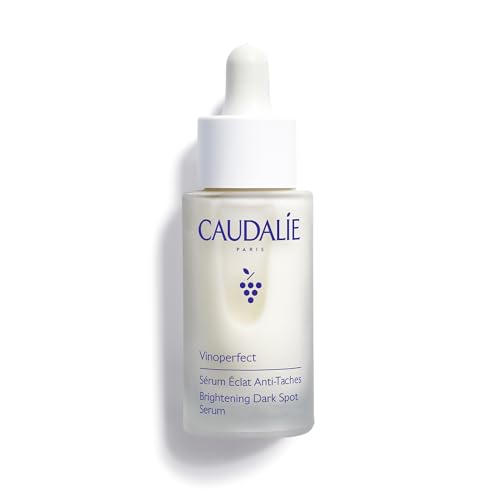
This is a product for anyone whose skin, no matter how hard they tried, just couldn’t tolerate Vitamin C. I will say, even without the Vitamin C, this product, in my opinion, is one of the best products on the market for dark spots. They use a patented formula with Viniferine and Olive Squalane. It is rich in antioxidants (some say even more so than traditional Vitamin C formulas), and it will protect your skin while leaving the skin with a more even skin tone. If you use Vitamin C, get this product. If you can’t use Vitamin C, get this product. The price is a little steep, but in my opinion, completely worth it.
There are other Vitamin Cs out there that I would encourage you to take a look at, including: Educated Mess Golden (created by one of my favorite chemists), Vichy Vitamin C (another drug store favorite), Mad Hippie (great reviews, but I have never tried it), Paula’s Choice Vitamin C Serum (although I don’t love the packaging of this one).
Like all skincare, trying to find the best Vitamin C for your skin and your needs can take a little bit of trial and error. I have tried my best to give a comprehensive list, and an alternative source for Vitamin C for those who just can’t tolerate the ingredient.
As always, we would love to hear from you if your have any questions or comments.
 From My Girl Friday
Leave a comment